Standing in front of a puzzling work and feeling lost is normal. The answer to how to look at contemporary art is to slow down: choose a single piece and give it 10 minutes before you read the label.
This guide belongs with the wider reading on brooklyn gallery exhibitions, for the next time you walk into a show.
| Item | Value |
|---|---|
| Average time visitors spend per work, per studies Tate cites | Eight seconds |
| Tate’s recommended slow-looking time | 10 minutes |
| Time Tate says can still reward you | Two minutes |
| Slow Art Day worksheet: time per work | 5-10 minutes |
| Slow Art Day worksheet: works to choose | Two |
| Slow Art Day: silent observation with a friend | 1-2 minutes |
These figures come from Tate’s guide to slow looking and the Slow Art Day worksheet. They can change, so check the sources before you rely on them.
Why does a quick glance leave you lost?
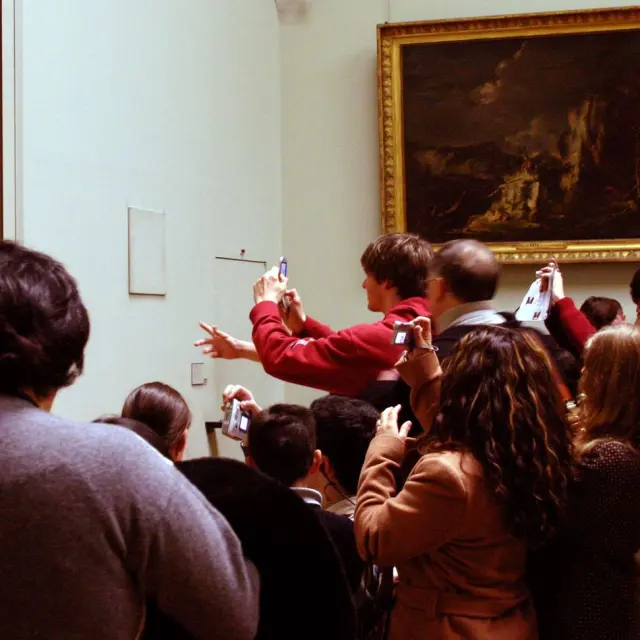
A gallery visit can turn into a race. Tate says studies have found that visitors spend an average of eight seconds on each work on display.
Another source puts the split more sharply: most people spend around 15 seconds on the wall text and glance at the work for around 3 seconds, according to Thames & Hudson Australia. The Slow Art Day worksheet gives a looser figure of under 30 seconds. Estimates differ, but they all describe short looks.
Feeling lost is often a question of time, not talent. The same worksheet says slow looking is accessible to everyone, with no expertise required, just curiosity and an open mind.
The sources behind this guide describe slow looking for any artwork, not only new work. Tate says any artwork can reward a longer look. The Slow Art Day worksheet also notes that researchers are only beginning to study the benefits, so treat it as a practical habit and not a proven cure.
Choose one work and give it time
Do not try to see the whole room. Tate suggests you think of the gallery as a menu, rather than a to-do list, and select a work that intrigues, attracts or frustrates you (Tate).
Tate recommends 10 minutes per work, though even two minutes can surprise you. To keep track of time it suggests a quiet phone timer or simply counting breaths (Tate).
The Slow Art Day worksheet asks you to select two works and spend 5-10 minutes on each. That is a modest plan that fits a short visit.
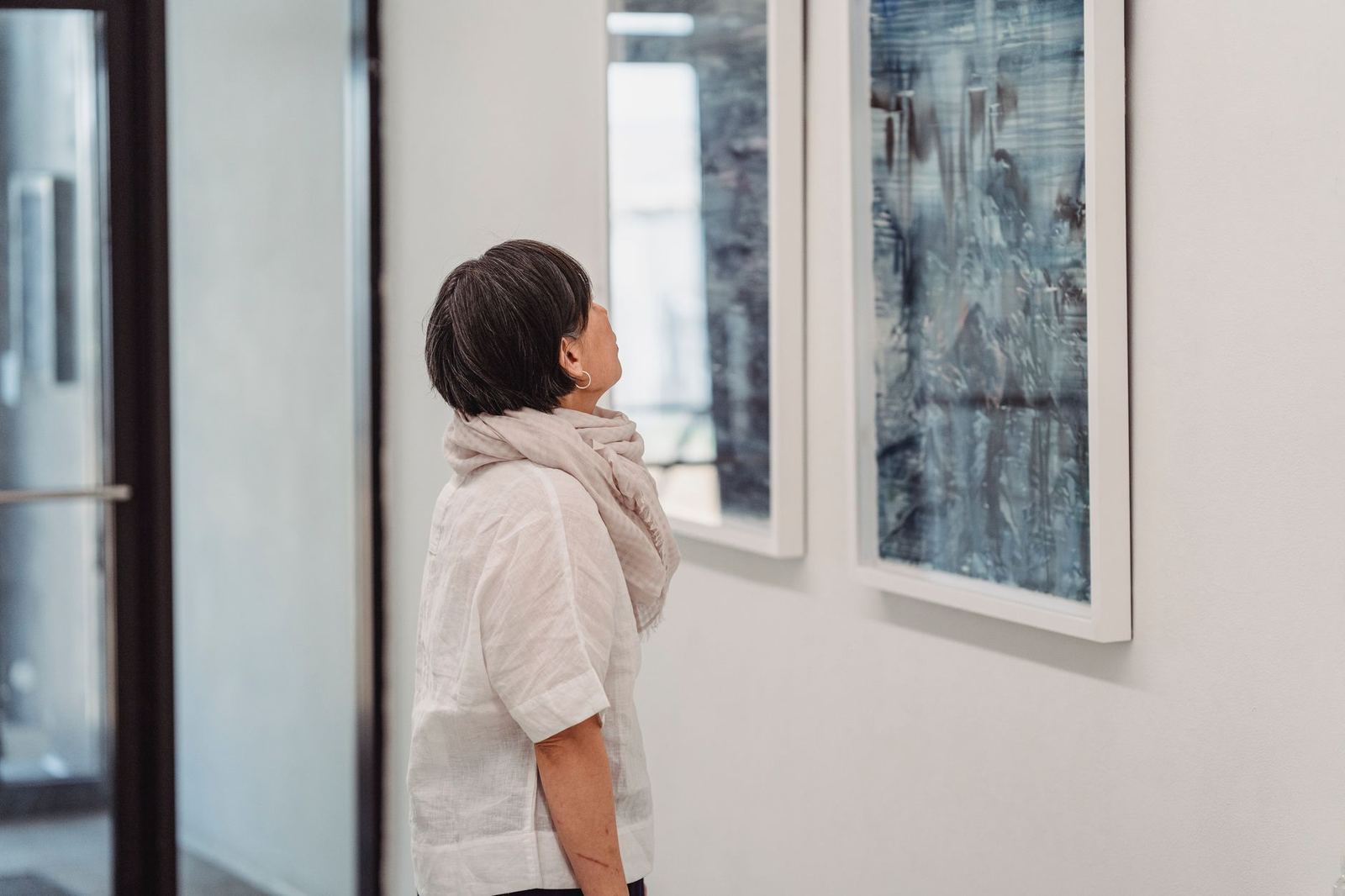
If your feet complain, sit. Tate suggests finding a bench, stool or space on the floor with a good view of the work, and you are free to move around it.
A step-by-step way to look
None of the sources demands a fixed routine. Here is one sequence built from their suggestions:
- Settle in. Find a comfortable spot with a clear view, as Tate advises.
- Look before you read. Thames & Hudson Australia says to resist reading the caption when you first approach a work. Labels give useful context, but the text is not the work.
- Scan it. The Clark Art Institute’s guide suggests looking left to right, right to left, top to bottom and bottom to top.
- Note your first catch. Ask what first caught your attention and whether it is still your focus now, as the Slow Art Day worksheet prompts.
- Pick an entry point. Tate offers texture, colour, shape, symbols, story and perspective if you are struggling.
- Zoom in, then step back. The Clark guide suggests focusing on details, then viewing the whole work again.
- Read the label last. Notice what the text confirms and what it changes.
Sources for the steps: Tate, Thames & Hudson Australia, the Clark’s Pause and Reflect guide.
If the label leaves you wondering why certain works hang together, reading about what is a curated exhibition can help you see the choices behind a show.
Tate’s own example shows why this pays off. In Kerry James Marshall’s Untitled (London Bridge) (2017), a quick look gives pigeons, a red bus and a typical London scene, but slower looking shows the bridge is actually in Lake Havasu, Arizona (Tate).
Four strategies when nothing comes to mind
Sometimes you stand there and nothing happens. Tate’s advice is not to worry if nothing comes to mind at first, and to be patient.
The BYU Museum of Art offers four strategies for slow looking on its slow looking page:
- Look big: cast a wide net, since this can yield a range of observations and reveal complexity.
- Narrow your focus: study only colours, shapes, lines, faces, hands, objects or arrangement.
- Change your perspective: alter your proximity to the work, as well as your vantage point.
- Compare and contrast: look at two adjacent artworks and describe your observations.
Pick whichever feels easiest. With an abstract or conceptual piece, narrowing your focus to one quality, such as colour or texture, is often the gentlest start.
Do you have to like what you see?
No. The Clark Art Institute’s guide states plainly that there is no right or wrong way to look at art, and it asks whether you like a work or not as a starting question (Clark).
Irritation counts as a reaction. Tate asks whether the art calms, irritates or excites you, and tells you to pay attention to your first impressions (Tate).
The worksheet from Slow Art Day adds a blunt test: would you display it at home? Your answer is information, not a verdict on your taste (Slow Art Day).
You may also wonder whether your reading matches the artist’s. Tate says connections might be intended by the artist or unique to you, and that both are valid.
Looking with others, and looking again
Slow looking works as a shared activity too. The Slow Art Day worksheet suggests picking one work, setting a timer for 1-2 minutes of silent observation, then sharing what you noticed for 2-10 minutes.
It also describes a back-to-back game: one person faces the artwork and describes it, while the other draws from the description alone. Then you compare results and switch.
Come back to the work, too. Tate suggests looking again straight away, after a coffee break or on a different day. Before planning a second visit, read the guide on how long do gallery exhibitions last.
Frequently asked questions
How long should I look at one artwork?
Show answer
Tate recommends 10 minutes, but says even two minutes can be rewarding (Tate). The Slow Art Day worksheet suggests 5-10 minutes per work (Slow Art Day).
Should I read the wall text first?
Show answer
Thames & Hudson Australia advises resisting the caption on first approach, because it can pull your attention from the work itself. It adds that the information is often important for context, so read it after you have looked (Thames & Hudson Australia).
Can I use my phone in the gallery?
Show answer
Thames & Hudson Australia suggests not taking your phone out, to keep your attention on the work (Thames & Hudson Australia). Tate allows a quiet timer on your phone, or counting breaths instead (Tate).
Is it rude to stare at art?
Show answer
Tate’s guide says it is not rude to stare at art (Tate). Be mindful of other visitors’ sightlines, but a longer look is the point.
Do I need art knowledge to enjoy contemporary art?
Show answer
The Slow Art Day worksheet says slow looking needs no expertise, just curiosity and an open mind (Slow Art Day). The Clark guide also says your own experience is a valid way of finding meaning in art.