Worried about doing something wrong at your first show? Gallery etiquette is simple: don’t touch the art, keep a safe distance, skip the flash and keep your voice low.
This guide sits within our wider coverage of brooklyn gallery exhibitions. House rules differ from venue to venue, so treat the museum examples below as a starting point.
| Rule | Value |
|---|---|
| Minimum distance from objects (Carnegie Museum of Art) | At least two feet |
| Bag size that must be checked (Carnegie Museum of Art) | Larger than 14x17x8 inches |
| Items that must go in the coatroom (RISD Museum) | Larger than 11 x 15 inches |
| Writing tools in the galleries (RISD Museum) | Pencils only; markers and pens not permitted |
| Flash, tripods and selfie sticks (RISD Museum) | Not permitted |
| Children needing an adult (Carnegie Museum of Art) | Under 12 |
These figures come from the visitor policies of the Carnegie Museum of Art and the RISD Museum. Museums update their rules, so check the venue’s own page before you rely on them.
Look, but don’t touch
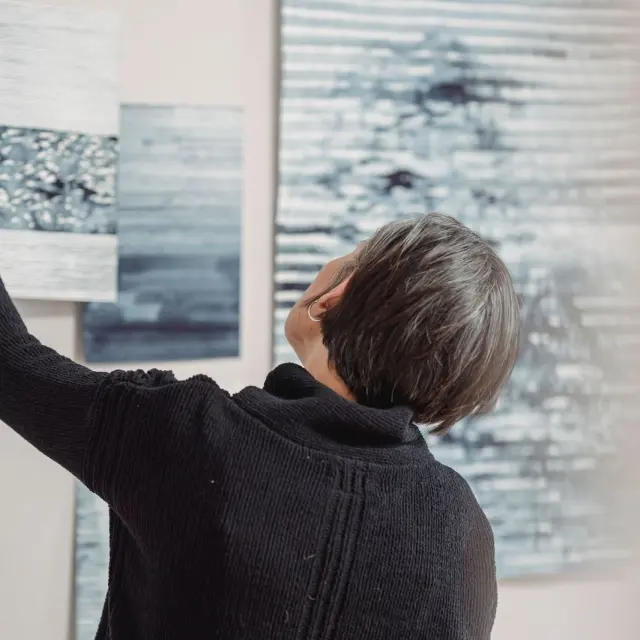
The rule every venue repeats is no touching. The RISD Museum’s guidelines explain that even clean hands can damage works of art.
How close is too close? The Carnegie Museum of Art asks visitors to stay at least two feet from all objects, and not to lean on display cases. The Cincinnati Art Museum suggests approximately arm’s length, or 3 feet, from paintings, sculptures and cases.
The Mount Holyoke College Art Museum sets a tighter limit of at least 6 inches and asks you not to point with any objects, including pencils. Because the numbers vary, the safe habit is to stay back and follow any floor markings.
The Art Institute of Chicago adds that the no-touch rule covers frames, platforms, labels and display cases. It also notes that lines on the floor or wires sometimes show the distance from which artwork can be viewed safely.
What to leave at the coat check
Big bags are a hazard in tight rooms, so most museums ask you to check them before you go in. Size limits differ:
- The RISD Museum says items larger than 11 x 15 inches, including large backpacks, umbrellas and sketchbooks, must be left in the coatroom.
- The Carnegie Museum of Art asks you to check bags larger than 14x17x8 inches, and not to carry anything on your back.
- The Art Institute of Chicago requires bags larger than 13 x 17 x 4 inches to be checked, and smaller backpacks to be carried on the front of the body or in your hand.
Food and drink are a separate matter. The RISD Museum does not allow either in the galleries, and the Mount Holyoke College Art Museum extends that to water bottles. The Art Institute of Chicago lets you carry a water bottle if it is stowed safely in a bag around art.
Photography and sketching
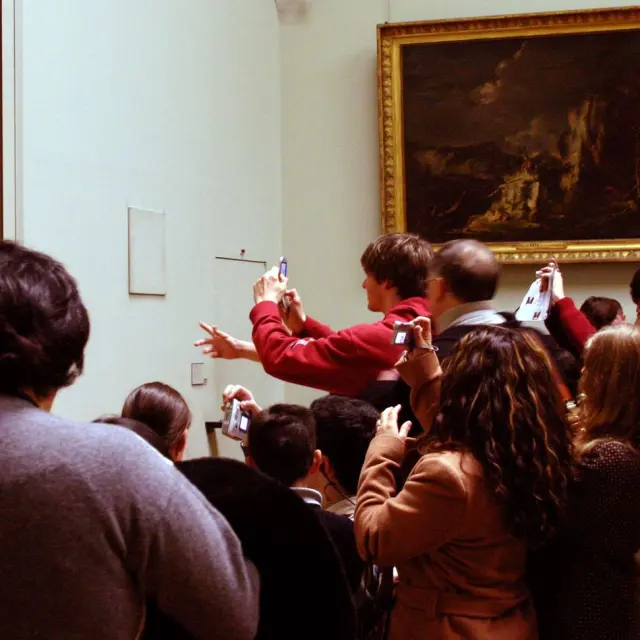
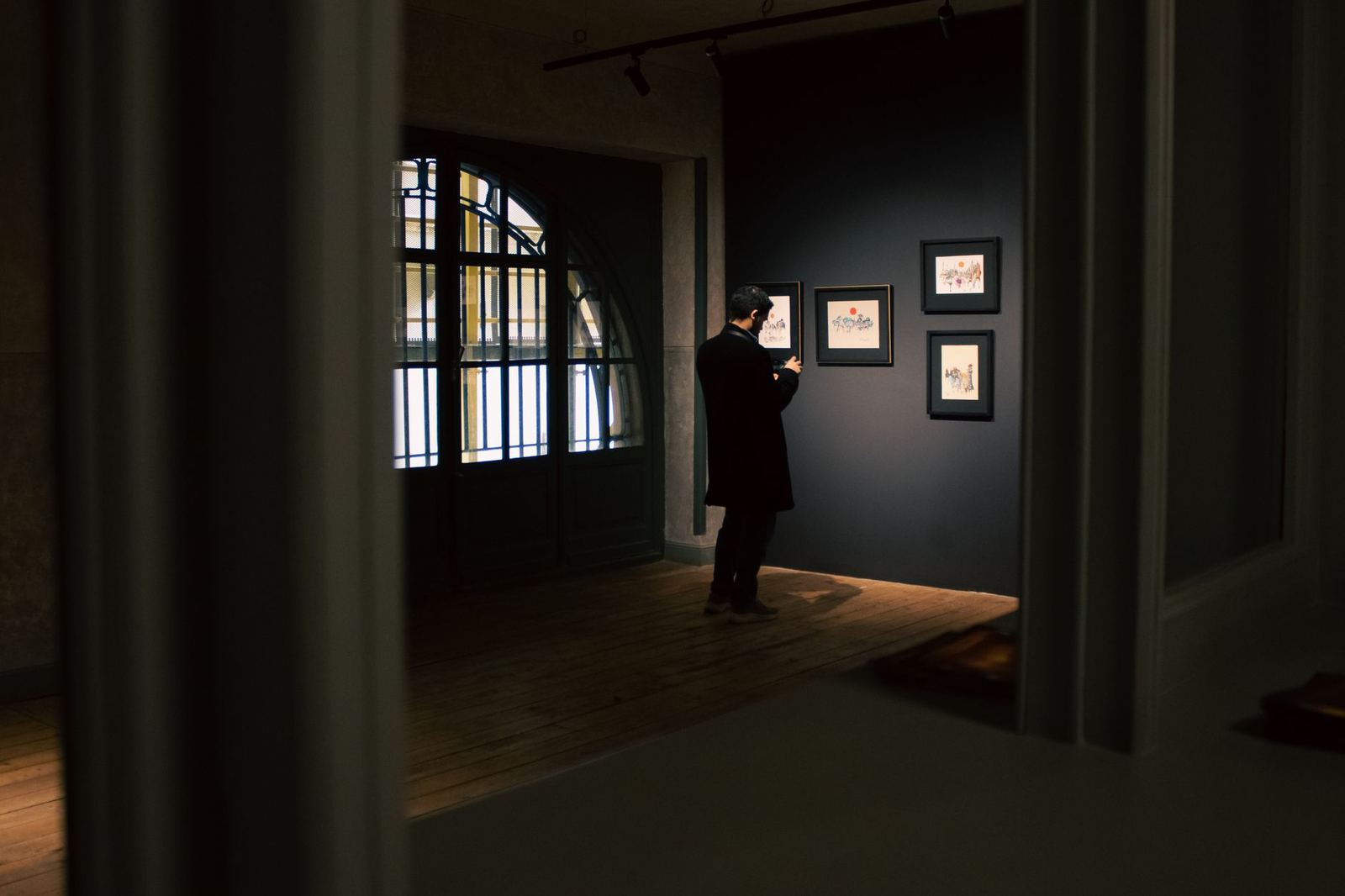
Photos are usually welcome, with limits. The RISD Museum allows photography and filming in its galleries but not flash, tripods or selfie sticks, and the Cincinnati Art Museum limits visitor photography to personal, noncommercial use.
Other people count too. The Carnegie Museum of Art asks visitors not to capture identifiable likenesses of individuals without written permission, and to honor requests from anyone who does not want to be in a photograph. Take your shot, then step aside so others can see.
If you sketch, bring a pencil. The RISD Museum does not permit markers or pens, and the Carnegie Museum of Art permits only pencils and paper. A few more habits keep sketching polite:
- Do not prop your work on a wall, pedestal or platform, as the Smart Museum of Art asks.
- Stay out of the walkway, because the Mount Holyoke College Art Museum asks sketchers not to hinder visitor traffic flow.
- Keep your distance. The Cincinnati Art Museum asks copyists to stay at least 4 feet from a work and not to use floors, walls or pedestals as support.
How should you behave around other visitors?
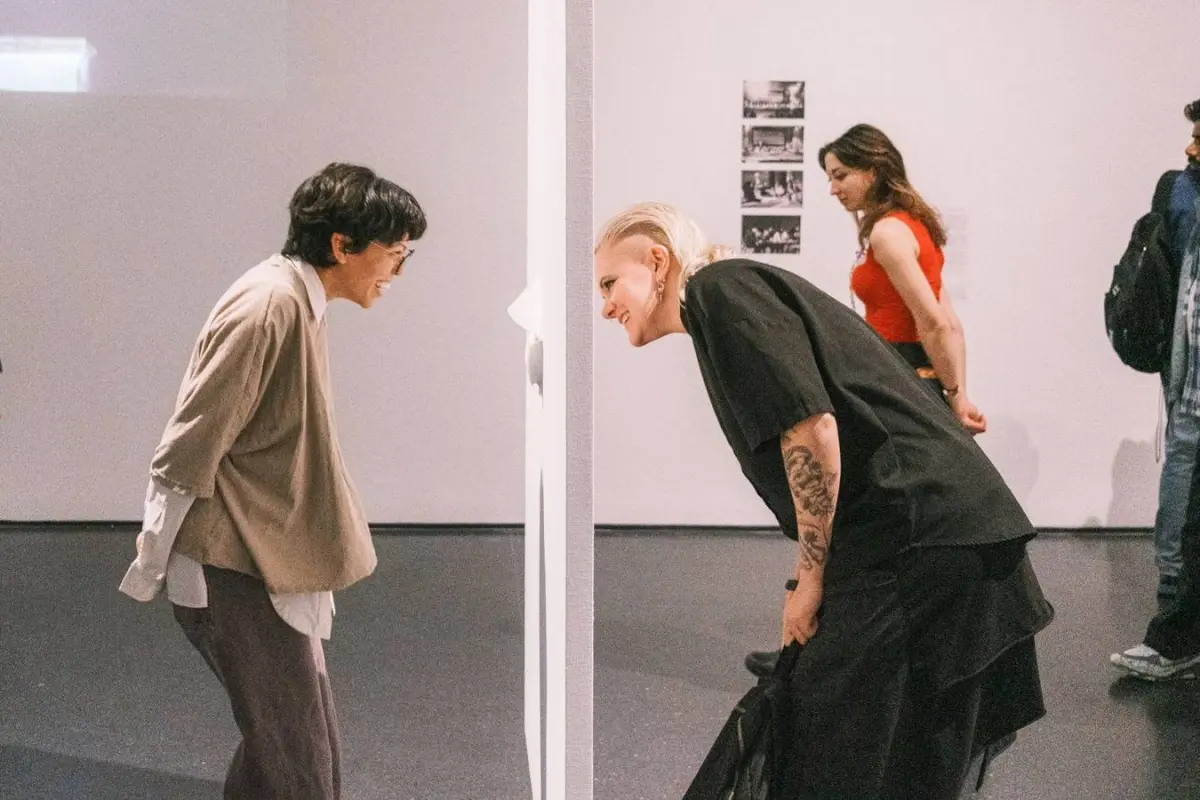
Galleries are shared spaces. The RISD Museum asks you to be mindful of tours, teaching programs and other visitors when talking, to use headphones or keep phones on silent, and to avoid calls in the galleries.
Keep the paths open, too. The Art Institute of Chicago asks you to keep doorways, stairs and hallways clear and not to sit on the floor, and it lists running and rough play among prohibited activities. Benches are available if you need a rest.
Children are welcome, with an adult beside them. The age thresholds differ:
- The RISD Museum requires minors under 13 to be accompanied by an adult at all times.
- The Carnegie Museum of Art requires children under 12 to be accompanied by an adult.
- The Art Institute of Chicago requires children under 14 to be accompanied by an adult.
The RISD Museum also says children may not be carried on shoulders, on backs or in backpack child carriers, for the safety of the artworks.
Do the rules change for special exhibitions and openings?
Sometimes they do. The Carnegie Museum of Art warns that some special exhibitions, galleries and individual artworks may restrict photography because of loan and copyright requirements, and marks them with a symbol on the label. The Smart Museum of Art says works on loan from other institutions or individuals may not be photographed.
Sketching rules shift as well. The Cincinnati Art Museum does not permit sketching and copying in special exhibitions, while the Art Institute of Chicago allows pencil sketching in special exhibitions provided lenders have set no restrictions. Read the label and ask a staff member if you are unsure.
Evening events add crowds, so our explainer on what is a gallery opening reception is worth a read before you go. Our short guide to what is a curated exhibition explains why works are grouped the way they are.
A quick checklist before you walk in
- Check the venue’s website for its photography and bag rules.
- Leave large bags and umbrellas at the coat check.
- Finish food and drink outside.
- Bring a pencil, not a pen, if you plan to sketch.
- Silence your phone and turn the flash off.
- Stay back from every work, and follow floor markings.
Frequently asked questions
Can I take photos in a gallery?
Show answer
Often yes, without flash and for personal use. The Art Institute of Chicago encourages personal, noncommercial photography and permits non-flash photography in all permanent galleries, but some loaned works are restricted, so check the label.
Can I bring a pen to take notes?
Show answer
Usually not. The Cincinnati Art Museum permits pencils but prohibits pens and markers, so pack a pencil.
Can I bring a drink into the galleries?
Show answer
Rarely. The RISD Museum does not allow food or drink in its galleries, though the Art Institute of Chicago permits a water bottle stowed safely in a bag.
What if I am not sure about a rule?
Show answer
Ask. The Cincinnati Art Museum says friendly guards are stationed throughout its galleries to help, and the Art Institute of Chicago invites you not to hesitate to ask staff for guidance.